
When internet influencer Hasan Piker returned from a recent trip to China, he described it as a workers’ paradise, and praised the country’s “abundance style consumption paired up with a centrally controlled economy.”
Piker should have spent more time talking to workers like Hu AnYan, author of the 2023 bestseller I deliver parcels in Beijing which has sold over 2 million copies in China. It tells the story of how Hu made a living in more than six cities, holding 19 different jobs over 20 years. He was a bus driver in Guangzhou, a waiter in Nanning, a security guard in Dali, and a bicycle salesman in Shanghai.
In many of these positions, Hu had a “996” work week, from 9 AM to 9 PM six days a week. That’s 72 hours per week, sometimes plus overtime. Technically the 996 work week was outlawed in 2021, “after a 22-year-old woman at e-commerce firm Pingduoduo reportedly collapsed to her death on her way home from work past midnight.” However there is little reinforcement of labor laws in China, and for many 996 is still a fact of life.
Hu’s book describes the details and concluded that a “work environment like that squeezes all life from a person. You wind up emotionally overdrawn, and numb and indifferent… my work situation [changed] me, little by little, making me irritable, prone to anger, [and] unconcerned by my responsibilities.”
Hu is not the only one to feel this way. According to a recent marketing company survey “the China Dream has stalled and no one knows what to do about it… young people inherited great expectations from China’s phenomenal economic rise, which began to slow in the 2010s, and from the democratization of China’s higher educational system…This ringing success has fallen flat because the job market has not kept up with university expansion…This appears to be where China is now: school is a marathon, but nobody wins.”
A few years ago, the word involution – neijuan in Mandarin- began trending online in China to refer to the unrelenting competitive pressure faced by young people and the difficulty of getting ahead. Since then the word “has become shorthand in China for the exhausting… often futile and sometimes self-destructive grind of hyper-competition… It’s a race to the bottom.”
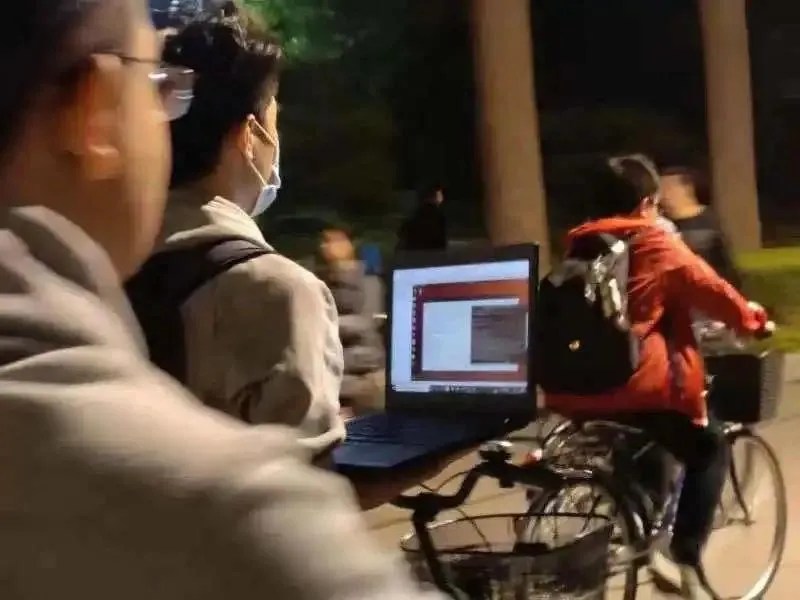
One key cause is the central government’s “survival of the fittest approach” to dominating technical industries. For example, when China decided to lead the world in solar panels, the government paid for it. Three time Pulitzer prize winner Thomas Friedman described how this plays out in a recent podcast: “Every major city in China decides they need a solar panel factory, and the local government subsidizes it. [Suppose they finance]… 75 solar panel companies. They compete like crazy against each other… and the Chinese government, absorbs a huge amount of waste, failure and graft. [Maybe] five of the companies survive. But those five are so fit that they can then go global at a price and level of innovation that is very hard for a foreign competitor to deal with.”
And even the winners are hurt in the long run since “Excessive competition has led to shrinking corporate profit margins across multiple sectors, including electric vehicles (EVs), solar panels, lithium batteries, steel, cement and food delivery… For example, according to one study of 33 automakers headquartered in China, the sector’s median net profit margin fell to just 0.83% in 2024 from 2.7% in 2019.”
“This [survival of the fittest policy]… results in misallocation of capital, reducing productivity growth and ultimately slowing GDP growth. By destroying profit margins for even the best-run Chinese companies, involution damages their ability to invest for the future.”
The government is also “keeping wages suppressed.” In addition, “excessive corporate competition from involution contributes to China’s overwork problem, because it gives companies an incentive to work their employees to the bone in order to get a competitive edge.”
This is particularly troubling for workers who lived through China’s economic miracles. “For the last four decades, China’s economy experienced perhaps the most extraordinary growth period in human history. In 1981, over 90 percent of China’s population lived in poverty as severe as in the world’s least developed regions. Today, over half the population is middle class, with a standard of living comparable to that of many developed nations. Yet in some ways, middle-class Chinese have never felt poorer. The sense of lagging behind their peers’ quality of life has increased, and opportunities for their children to achieve wealth and study abroad seem more out of reach.”
“Many now feel the very state policies that have made China appear strong overseas are hurting them. They see a government more concerned with building global influence and dominating export markets than in addressing the challenges of their households…These days, there is a sense of bitter anger among the people at being the voiceless victims of the state’s obsession with world power and beating the United States…”
In 2021, I wrote a post about one reaction to these challenges, the social movement that became known as “lying flat.” The term was invented by a dropout named Luo Huazhong, who wrote a blog describing his “low-desire, zero-pressure lifestyle without stable employment, while staying with his parents in Zhejiang province.”
Luo’s posts spread like wildfire, until censors intervened and “the original post on ‘lying flat’ suddenly disappeared. The search function for ‘lying flat’ on WeChat, where the word had still been trending, was disabled. On the Douban social networking service, a ‘lying flat’ discussion group was also shut down.”
Popular lying flat T-shirts — with slogans like “Don’t buy property; don’t buy a car; don’t get married; don’t have children; and don’t consume” – disappeared from online stores.
Despite the “Party’s high-minded calls for ‘continued struggle’” and censors’ efforts, the term continued to grow in popularity as “a response to the exhausting frenzy of China’s work life—particularly in the big cities. Lying flat means keeping low, protecting yourself, lowering your expectations, staying out of the way… The idea behind lying flat is that you can’t win; even with all your overtime and your scrimping and saving, you are still exhausted and running in place.”
Over the last few years, the term has evolved “from a protest to a proactive lifestyle choice [and] one of the most significant social trends in modern China. It signals a generational break from the singular, state-promoted definition of success… China’s youth are… using their education, digital tools, and economic privilege to architect lives of meaning on their own terms. Their silent exodus is creating new cultural hubs, empowering a new generation of artisans, and fundamentally altering the consumer map.”
“A growing cohort of highly educated, urban millennials and Gen Zers are actively engineering an exodus from the pressure cookers of Beijing, Shanghai, and Shenzhen, seeking a new definition of success in China’s so-called ‘slow life’ cities… Cities like Dali in Yunnan, Chengdu in Sichuan, and Xiamen in Fujian have become magnets for this new wave of migrants. Their appeal is a carefully balanced equation: they offer vibrant cultural scenes, natural beauty, and a slower pace of life while still maintaining the connectivity and modern amenities necessary for a professional life…More importantly, they offer more reasonable living costs.”
To sum it up, “it seems as if Chinese people — especially young people — are stuck on a treadmill. China’s young people are studying hard, getting a college education, and putting in grueling long work hours. And yet youth unemployment rates are rising relentlessly, many college graduates can’t find the kind of white-collar work they trained for, and wage growth is sluggish.”
Of course, China is not the only country where people feel stressed and overworked. For example, “despite prosperity in nearby South Korea, young people there are known as the seven-give-up generation, believing they will never find love, marriage, childbirth, human relations, homeownership, personal dreams [or] hope.” But that’s another story.
 Understanding China, five minutes at a time