China’s savings problem

As explained in my previous post, China is in trouble.  A recent CNN article summed it up like this:  the economy “is stalling… a real estate crisis is deepening and exports are in a slump. Unemployment among youth has gotten so bad the government has stopped publishing the data.”

One of the factors that is holding the economy back is that Chinese households save too much: about 46% of their disposable income.  This is more than ten times higher than the US household saving rate of roughly 4%.   According to Forbes, “the high Chinese household savings rate has no peer among major economies.”

Wait a minute.  The Chinese save too much?  My parents, who grew up during the Great Depression (1929-1941), would have thought that impossible.  But according to John Maynard Keynes’ “paradox of thrift,” when people don’t spend enough, demand decreases, production decreases, and the entire economy slows down.

As a result, according to many economists, “Unleashing domestic consumption is the surest path for China to achieve its goal of becoming the world’s largest economy, anchored by the world’s largest middle class, by 2035.”

Why are Chinese saving habits so different from our own?  As I have often argued in this blog, the answer begins with cultural differences.  According to the Tao Te Ching, written about 400 BC, “the three greatest treasures one can have are love, frugality, and generosity.”  Confucius also wrote about the benefits of being cheap, when he said:  “He who does not economize must agonize.”  If you think writings from 2,400 years ago are irrelevant to current behavior, consider the fact that Zhou Xiaochuan, former Governor of the People’s Bank of China (2002-2018), has said that “his country’s high saving rate as in large part the product of Confucianism, which values thrift, self-discipline, moderation, and an aversion to extravagance.”

In modern times, just as my parents learned the importance of saving during the Depression, many Chinese parents and grandparents learned to save during the famines and economic uncertainty of life under Mao, and in the rapid changes rooted in the marketing reforms initiated by Communist party leader (1978-1989) Deng Xiaoping.

You might think Chinese citizens should be less worried about money today, since Deng’s reforms have lifted 850 million people out of poverty.  But, according to an August New York Times article, “Chinese consumers [are still] afraid to spend, due in part to the government’s years of inattention to building an adequate safety net for seniors, the jobless and others in financial stress.” 

The article goes on to argue that safety net problems were made worse by China’s strict and expensive “zero covid” policies, given the high cost of testing, surveillance and quarantines.  “Many local governments have been cutting residents’ health benefits this year after anti-Covid measures depleted municipal health insurance funds in 2022. Health coverage reductions have triggered street protests in cities like Wuhan, Guangzhou and Dalian.”

Economic challenges are also common for the elderly. “Faced with a rapidly aging society and a national pension fund that is expected to run out of money by 2035, the central government has also cut back on increases in payments to seniors.”

Many economists had predicted that when the covid lockdown ended, China would experience the same kind of revenge spending seen in the US, where people bought much more than usual after the restrictions of the pandemic were lifted.  But, like many other economic predictions, this turned out to be wrong.

With the wisdom of hindsight, two think tank economists wrote in July that “Chinese households seem even more worried about their jobs and income now than during much of the pandemic. When asked whether they would consume, invest, or save more in the coming weeks, 58 percent of Chinese depositors said they would save more, according to the People’s Bank of China’s depositor survey for the second quarter of 2023.”

Economic uncertainty also affects the marriage prospects of young adults.

Among many Chinese, “to be considered as a suitable candidate for marriage, you should be financially stable.  And the more money you have, the better the prospect you become.”  For example, one woman raised in China recently reported that “the first time she introduced her fiancé to her parents… almost immediately, they asked three questions: ‘What does he do for a living, how much does he make, and how much property does he own?’”

In China, men seeking a spouse can gain an edge by proving their wealth.  Gifts of money are considered both thoughtful and practical.  One man recently gave his Chongqing girlfriend this money bouquet, which consists of 3,344 carefully rolled up bills, with a total value over $45,000.

Economic barriers to mating have also been increased by the fact that there are too many males and not enough females.  Specifically, there are between 107 and 116 males per 100 females (depending on their age between 15 and 35).  According to Forbes “A variety of factors conspire to produce the imbalance. For one, Chinese parents often prefer sons. The availability of ultrasound makes it easy for parents to detect the gender of a fetus and abort the child that’s not the ‘right’ sex for them.”

Yikes.  That’s still going on in the 21st century?

One result of all this is that “Nearly 35 million young men in China will hardly ever find a real date or even have sex in their lives.”

Double yikes.  Still another reason to be glad I don’t live in China.

Is the problem of too much saving in China likely to be solved soon?  Nope.

For decades, the World Bank, the International Monetary Fund and prominent economists have been urging the Chinese government “to do more to support its consumer economy, and to stop relying on growth built on speculative construction of apartment towers and heavy public investment in infrastructure like roads and high-speed rail lines.”

Specifically, economists recommend changes like this:

  • Make the income tax more progressive and family friendly;
  • Spend more on health care, pensions and education;
  • Spend more on assistance to the poor, which would reduce income inequality.”

But Xi Jinping has different priorities.  According to Foreign Affairs, Xi “appears much less interested in organizing the economy for growth than his predecessors did. Instead, he is optimizing it for security and resilience.”

And, if that’s not enough, Xi “has a well-known aversion to any social spending, which… he believes might erode the work ethic of the Chinese people… [In one famous speech], Xi said ‘we must not aim too high or go overboard with social security, and steer clear of the idleness-breeding trap of welfarism.’” 

Opposition to social spending feels like a very odd position for a Communist leader to take.  Then again, in today’s China, Communism is whatever Xi Jinping says it is.

China’s rise and the “big cycles” of human history

“The United States is the most powerful country [in the world], but [it is] declining.  China is close behind and rising quickly.” 

By itself, this quote from Ray Dalio’s fascinating book “The Changing World Order: Why Nations Succeed and Fail” (p. 496) would hardly be news.  Many others have made similar claims in the past, including me.  What’s different about this particular quote is the sheer amount of data and analysis that lies behind it.  As one reviewer put it, the book is “a sprawling, holistic study of how the world has worked over hundreds of years of history.”

Author Ray Dalio is well known in business circles as the founder of Bridgewater Associates,  the largest hedge fund in the world, with over $126 billion in assets under management.  Dalio retired last year, and published this book (his fourth) near the end of 2021.

Over the course of his career, Dalio became interested in long-term trends in investment booms and busts.  He began developing an enormous database of information on the rise and fall of “empires” which dominated world power and wealth.  By combining 18 measures of power into a single number, he was able to map out the “big cycles” by which four countries have dominated the world over the last 500 years.

This graph summarizes Dalio’s “big cycles” in relative power and wealth over the last 500 years, for the four most influential countries in the world.  For other countries, see Dalio’s book, or his free website.

As you can see in the graph above, the Netherlands (through the Dutch East India Company) was the most powerful empire in the world from the 1600s to the mid-1700s, followed by the UK through about 1900, and then the US.  China’s graph is the most interesting of these four, since by Dalio’s measures, it was the most influential empire roughly 1500-1625.  It declined suddenly in the 1800s due to the effects of European imperialism, including the Opium Wars, the Boxer Rebellion and more.  China began rising again after the conclusion of its revolution in 1949, and now threatens the US for the position of number one in the world.

The “big cycles” in the graph above are based on three smaller, underlying cycles that last 50 to 100 years within each country: economics (long-term debt and capital), internal order/disorder, and external order/disorder.  The ups and downs in these three sub-cycles can drive stock market booms and busts, and even wars.  Given the length of 50-100 years, many people’s entire lives are spent when things are near the top or near the bottom of a cycle. 

When examined from a distance, my entire post-war generation has lived near the top of the most comfortable peak in human history.   Of course, on a day-to-day basis such events as climate change, nuclear proliferation, Vietnam, Iraq, Afghanistan and the Ukraine, and the death of Miles Davis have hardly felt like we are living near the top.  But think big picture.  I have never lived through a local war or a famine, and technical advances have made my life longer and more comfortable than for any of my ancestors. 

As a result of living near the top, many people my age have become so comfortable taking Hawaii vacations on their credit cards, and so optimistic about the future value of stocks, real estate and other assets, that they have little or no savings to serve as a financial cushion for when the cycle inevitably heads down.  (Unless they had parents like mine who passed along their fears from the Great Depression.)  This reality has some intriguing implications for record setting levels of national debt in both the US (over 31 trillion dollars) and China (a mere 13 trillion or so).  The details of Dalio’s models of economic cycles are complicated enough, that to deliver on my promise of “five minutes of understanding at a time,” they will have to be saved for my next post.

The US score for internal disorder has been increasing for decades, putting our country at an extreme disadvantage.  Large numbers of Republicans and Democrats have not started shooting at each other yet, but some days it’s not looking good.  China on the other hand, is the very model of internal order.  Mind you, I think it would be absolutely horrible to try to live under all China’s authoritarian rules and surveillance.  But these measures do increase China’s internal order, and thus the country’s power.

Increasing external disorder is a risk for both countries, as China and the US compete more forcefully in trade, technology, geopolitical influence and the economy.  In the worst case, this could lead to military conflict, planned or accidental.

Dalio’s cycles are computed from the values of fifteen “gauges.”  The most important ones are education, innovation and technology, cost competitiveness, military strength, trade, economic output, markets, and reserve currency status, which he classifies as the “eight key measures of power.”  There are also seven “additional determinants of power” including geology (such as natural resources), infrastructure, and acts of nature (like Covid).

For the latest data on each element, Dalio provides annual updates which can be downloaded for free from his web page at www.economicprinciples.org.  (This webpage also includes links to many other resources and presentations, all free.)  As of this writing, Dalio’s most recent update is entitled the Country Power Index 2022.  It summarizes the latest power and wealth data on 24 countries and adds details on how each of the gauges is calculated (p. 52-54).

For example, one gauge that is rising rapidly for China is “innovation and technology,” based on such variables as its share of global patents, R&D spending, and its large number of technology researchers.  The US is still number one on this gauge, but China is quickly catching up.  In fact, China is currently ahead of the US on only 2 of the 8 key measures of power: trade, as measured by China’s percent of global exports; and cost competitiveness, measured by variables such as “productivity adjusted labor costs.”  As Dalio (p. 6) summed it up, “The eight major measures of power [for the US] are very strong today but are… falling slowly… [In addition], the US is in an unfavorable position in its economic and financial cycles… Internal disorder is a high risk… [and] external disorder is a risk… [Thus, the US is] a strong power in gradual decline.”   

If China continues to rise while the US falls, the risk of conflict over a new world order will rise.  The graph below summarizes 18 forces that determine the rise and fall of empires:

This is Dalio’s summary of the main forces that determine the rise and fall of every empire
(from The Changing World Order, p. 51)

For a quick intuitive overview of how you would rate the US-China standings, just check off which of these 18 points best apply to the US today in your opinion, and which apply to China.  If you accept the validity of the list, you will certainly conclude, as I did, that China is on the way up, and the US is at the top in some ways and headed down in the rest. 

Dalio argues that all this adds up to trouble for the US, and for the world.  “Wealth, values, and political gaps are now larger than at any other point during my lifetime (p. 12) … There are great increases in internal conflict between the rich and poor and different ethnic, religious, and racial groups. This leads to political extremism that shows up as populism of the left or of the right… The most recent analogous time was the period from 1930 to 1945. This [is] very concerning to me.” (p. 2)

As I’ve written before, an understanding of the potential for conflict, and how to avoid it, is greatly complicated by cultural differences between the US and China, including their “political patience.”  In his book (p 379), Dalio puts it this way “While most Americans focus on particular events, especially those that are happening now, most Chinese leaders view current events in the context of larger, more evolutionary patterns…  Americans are impulsive and tactical; they fight for what they want in the present. Most Chinese are strategic; they plan for how they can get what they want in the future.”

One recent example of this difference appeared in a New York Times opinion piece by Nobel Prize winning economist Paul Krugman entitled “China’s Future Isn’t What It Used To Be.”  In the piece, Krugman quotes several sources to support this, notably two studies that recently pushed back their estimates of when China will become number one in the world.  One now projects that to happen in 2035 (vs. its previous projection of the mid 2020s), and the other projects says China at number one is “at least several decades” away (vs. its previous projection of 2033).

To mainland Chinese, delays of a few years or decades do not define “the future.” They are a mere blip on the screen in terms of 100-to-400-year cycles. 

But at the end of the day, Dalio concludes (p. 485):  The fact that the US is simultaneously deeply indebted, its international standing is weakening, and it is experiencing serious conflict should be concerning both to Americans and to non-Americans who depend on them. At the same time, in its 245-year history the US has shown a great capacity to bend without breaking. The greatest challenges it faces are internal ones: can it remain strong and united, or will it continue to allow division and internal struggles to lead to decline?”

China’s rise is accelerating

In a previous post, I explained four reasons I think China is likely to become the most powerful country in the world, sooner or later.  It’s starting to look like sooner.

Last year, the Chinese economy went up and ours went down.  In 2020, GDP (Gross Domestic Product – the total market value of all goods and services produced by a country) increased 2.3% in China and decreased 3.5% in the US.

When global insurance company Euler Hermes published an analysis of world economic trends a few weeks ago, they titled it “The world is moving East, fast.”  The report concluded:  “we now expect China to catch up with US GDP in 2030 instead of 2032, as expected at the end of 2019.” 

As a country, we have grown quite comfortable in our spot as the largest economy in the world.  According to a recent book by Singapore diplomat Kishore Mahbubani (Has China Won?, p.4) “At the end of World War II… America’s share of the global GDP was close to 50%… [although it had only] 4 percent of the world’s population… Throughout the Cold War, the GDP of the Soviet Union never came close in size to that of America, reaching only 40% that of American at its peak.”  (p. 4)

So the US has been “number one” for 76 years.  Starting nine years from now, in 2030, we may need to get used to being “number two.”

One reason why is obvious to every American who has been locked in the house for the last year, lost their job, binged on Netflix, or actually gotten covid: the differing reactions of the two countries to the pandemic.  As of February 11, 2021, the official death rate from covid was 1,430 per million people in the US, and under 4 per million in China.  This difference in success combatting the virus, and in the economic and political implications, are outlined in a January 26 CNN piece entitled  “China is rehearsing for when it overtakes America.” It explains how China managed to expand its economy while the rest of the world was slipping into the covid recession:  with “harsh quarantine measures and additional actions intended to spur growth.”

For example, last month when just 16 new covid cases were reported in Heilongjiang province, one city in the province put 5.2 million people under lockdown and another city banned people and vehicles from leaving for three days.  I despise the very idea of authoritarianism, but it sure can come in handy during a pandemic.

Another advantage China has in this situation its central control, with approximately one third of the economy managed by State Owned Enterprises which, according to the Euler Hermes report, were required by the government “to maintain economic activity and retain employment (even [when it was] unprofitable).”

The result: “While countries worldwide are sliding into recession… from the Covid-19 crisis… China has emerged stronger and more assertive.”

Sooner rather than later, the US is likely to be faced with a problem it has never faced before:  “what to do if a rich and capable rival with very different conceptions of liberty, human rights, social order, justice, and the role of government in society emerged and was fully committed to a course of action that threatens U.S. security?”

Along with their economic progress, China is also winning the propaganda war for what Harvard political scientist Joseph Nye has called “soft power”:  foreign policy success based on using attraction and persuasion rather than force. 

Mahbubani argues (Has China Won? p. 6) that “From the 1960s to the 1980s, American soft power soared.  [But] since 9/11, America has violated… international law and international human rights conventions (and became the first Western country to reintroduce torture)… and American soft power has declined considerably.” 

Meanwhile, in the next few years, as the pandemic recedes, many countries will face internal challenges and perhaps instability.  In this type of environment, the “countries most adept in using soft power to facilitate positive collaboration will be better placed to… shape global events.”

According to a Mercator Institute for China Studies report on China’s 2021 agenda. “One thing is certain, China will continue to gain influence globally. Its ‘vaccine diplomacy’ will probably contribute to this: China supplying urgently needed Covid-19 vaccines – as it is currently doing in Indonesia – will shore up relations with developing countries.”

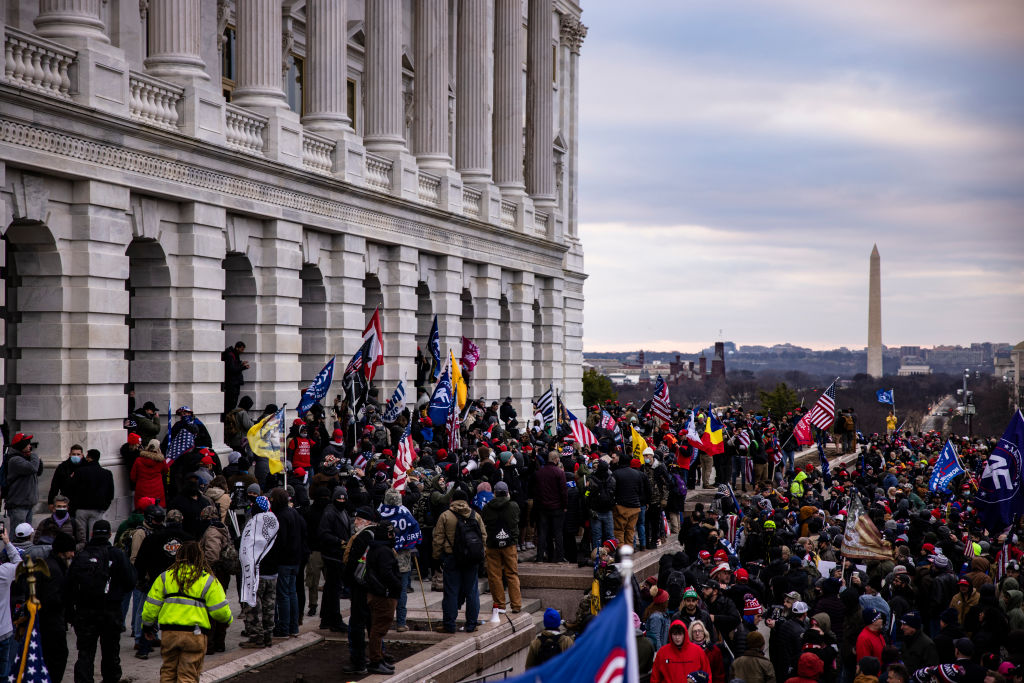
The worldwide reaction to the January 6 Capitol riots has reduced US power and influence.

And, as if all that is not bad enough, all of our post-election mayhem last month has had a very negative impact on perceptions of the US by enemies and allies alike.  A February 4 Washington Post article summarized how the Chinese propaganda machine quickly seized this opportunity.  Within 24 hours of the January 6 Capital riot, videos began to appear on Chinese social media with headlines that referred to the US with such terms as “permanently damaged,” “a failed state,” and “the greatest threat to world peace.”

Graphika, a company that uses artificial intelligence “to reveal and study online communities” issued a report which summarized Chinese social media use of Capitol riot videos, and concluded that the overall message was that  “The United States, which has always promoted democracy and human rights, has become a country of riots, conflict and curfew.”  The report went on to say that “The unifying theme that underlay such posts was that America is broken, and American democracy is not a model that any country should emulate, regardless of which party rules in Washington: the storming of the Capitol ‘tore the false mask of American democracy to pieces,’ as one video narration stated.”

Ouch.

The Global Times, an English newspaper published by the Chinese Communist Party, poured it on by tweeting “@SpeakerPelosi once referred to the Hong Kong riots as ‘a beautiful sight to behold’ — it remains yet to be seen whether she will say the same about the recent developments in Capitol Hill.”

In short, as the Washington Post article summed it up, all of 2020’s “bad news for America has been good news for [China]. Because the overall narrative they’ve been building is China’s rising and America’s falling.”

But before you start studying Mandarin, it is important to note that China has plenty of problems of its own.  According to a recent Foreign Affairs article with the ominous sub-title “The Risk of War Is Greatest in the Next Decade,” “The Sino-American contest for supremacy won’t be settled anytime soon.”

The article goes on to note that “Since 2007, China’s annual economic growth rate has dropped by more than half, and productivity has declined by ten percent. Meanwhile, debt has ballooned eightfold and is on pace to total 335 percent of GDP by the end of 2020. China has little hope of reversing these trends, because it will lose 200 million working-age adults and gain 300 million senior citizens over the next 30 years.”

In short “America would present a formidable challenge to China if it were a united, strong, and self-confident country.” (Has China Won?, p 51)

Let me think.  A truly United States of America?  In which Republicans and Democrats met in the middle with a bi-partisan approach, and politicians put the good of the country above their personal ambitions?  I sure would like to believe that’s in our future.